

Successful Sea Trials for Becker Daggerboard Technology
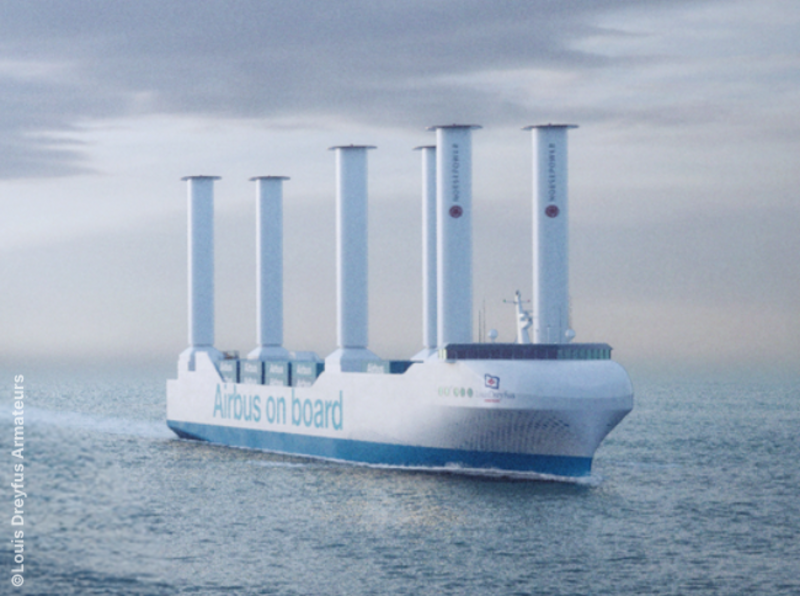
Becker Marine Systems’ Anti-Drift Daggerboard technology has been successfully tested during sea trials of the new Airbus transport vessel ‘Spirit of Toulouse’. Equipped with specially developed Anti-Drift Daggerboards from Becker Marine Systems, the vessel combines innovative wind-assisted propulsion with advanced hydrodynamic technology to improve overall efficiency. The project marks an important milestone for Becker Marine Systems and demonstrates the role of advanced hydrodynamic technology in supporting efficient wind-assisted propulsion.
Becker Marine Systems’ Anti-Drift Daggerboard system has been successfully tested during sea trials of the ‘Spirit of Toulouse’, a new RoRo cargo vessel designed to transport Airbus aircraft components across the Atlantic. The 168-metre-long vessel was built for the French shipping company Louis Dreyfus Armateurs (LDA) and will operate between Airbus production sites in Europe and its final assembly facility in Mobile, Alabama (USA).
One of the vessel’s key features is its innovative propulsion concept: Six 35-metre-high Flettner rotors supplied by Finnish manufacturer Norsepower harness wind energy to generate additional thrust, thereby reducing fuel consumption. The Wind Assisted Propulsion System (WAPS) is complemented by a specially developed Anti-Drift Daggerboard system from Becker Marine Systems.
Daggerboards as a key component of efficient Wind-Assisted Propulsion
In addition to generating the desired forward thrust, wind-assisted propulsion systems also produce lateral forces that can cause a vessel to drift off course. This is where Becker Marine Systems’ Daggerboard technology comes into play.
The hydrodynamically optimised underwater fins generate lift that counteracts lateral drift. This allows a greater proportion of the wind energy harnessed by the rotor sails to be converted into effective forward propulsion. As a result, the overall efficiency of the propulsion system is improved, helping to reduce fuel consumption and associated emissions.
For the ‘Spirit of Toulouse’, Becker Marine Systems supplied a foldable Daggerboard. Each fin has a surface area of 8.8 m². The system is designed to generate a lift force of 300 kN per vessel.
A joint step towards lower-emission shipping
The ‘Spirit of Toulouse’ is part of a new fleet of three wind-assisted RoRo cargo vessels with which Airbus aims to significantly reduce emissions from its transatlantic logistics operations. In addition to wind-assisted propulsion, the vessels are equipped with dual-fuel engines capable of operating on alternative fuels. According to Airbus, the three vessels are expected to reduce annual CO₂ emissions from transatlantic shipping operations by more than half by 2030 compared with 2023 levels.
For Becker Marine Systems, the project highlights the importance of a holistic approach to improving vessel efficiency. “Wind-assisted propulsion systems can make an important contribution to the decarbonisation of shipping. However, the key lies in ensuring that all components of a vessel work together optimally. With our Daggerboards, we provide the hydrodynamic conditions needed to harness wind power even more efficiently for propulsion. The ‘Spirit of Toulouse’ is an impressive example of the potential offered by this holistic approach,” explains Dr Tobias Haack, Managing Director of Becker Marine Systems.
With the successful delivery of the ‘Spirit of Toulouse’, Becker Marine Systems’ Daggerboard technology now forms part of a forward-looking transport concept that demonstrates how renewable wind energy and advanced marine engineering can be effectively combined.
→ Find out how the Becker Daggerboard improves vessel efficiency

